
How to Choose Between Legacy Icons and Holy Art

Last Updated: November 2, 2026
Quick Summary
Legacy icons are traditional, handcrafted sacred images made for prayer and veneration, while holy art is the broader category covering icons plus religious paintings, frescos, mosaics, and printed reproductions. Choose legacy icons when you want named sourcing and detailed material specs, and a broad sacred-art marketplace when you want the widest selection and will verify each listing yourself.
- An icon follows tradition with flat perspective, gold leaf, and tempera; a religious painting follows the artist's imagination.
- Compare the same size, material, mounting, and finish before comparing prices between two sellers.
- Add shipping, sales tax, framing, delivery time, and return shipping to get a real total cost.
- Ask sellers where the source image was photographed and who painted the original.
- Test support before buying by sending one short question and noting the reply time.
Table of Contents
- What Is an Orthodox Icon and How Does It Differ from Holy Art?
- Legacy Icons and Holy Art: A Direct Comparison
- Printed Orthodox Icons: Materials, Durability, and What to Expect
- How to Choose an Orthodox Icon for Your Home Altar or Parish
- Shopping for Orthodox Icons Online: What to Verify Before You Buy
- Traditional Iconography and Visual Conventions to Look For
- Ordering Iconography for Your Church or Home Prayer Space
- Frequently Asked Questions
What Is an Orthodox Icon and How Does It Differ from Holy Art?
An Orthodox icon is a sacred image made for prayer and veneration, not a decorative religious picture.
Icons belong to a living Christian tradition, showing Christ, the saints, or feast days in a fixed visual language. Holy art is the wider category, covering icons plus religious paintings, frescos, mosaics, and printed reproductions.
That difference matters when you buy. A religious painting may move you. An icon is made to be prayed before.
The Theological Purpose of Icons as Windows into Heaven
Orthodox teaching calls an icon a window into heaven. The image is not worshipped; the honor passes to the person shown. An icon is a theological statement in paint, made for devotion, not decoration.
Icons carry this purpose into the home and the church. Families keep them on the altar shelf. Parishes set them in the nave for worship.
Icon Versus Religious Painting: Why the Distinction Matters
An icon follows rules. A religious painting follows the artist's imagination. That is the whole distinction.
Icon painters work within tradition: flat perspective, gold leaf, tempera, and set patterns for faces and garments. A religious painting can bend all of that for emotional effect. Both can be beautiful. Only one is made to serve prayer in the same way.
Legacy Icons and Holy Art: A Direct Comparison
Both terms point to the same sacred purpose, but they describe different things. Legacy icons usually means traditional, handcrafted images made to last.
For buyers, the real question is not the label but how the piece is sourced, made, and supported after you order. This section gives you a neutral, like-for-like framework for comparing a specialist icon retailer against a broad sacred-art marketplace.
Compare Equivalent Products, Not Starting Prices
A starting price tells you almost nothing. A 4-inch paper print and a 12-inch canvas-mounted panel are not the same product, even if both are listed as "icons." Before you compare two sellers, line up the same four variables:
- Size: match the height and width in inches, not the category name
- Material: paper print, canvas on panel, or hand-painted wood are three different products
- Mounting: unframed, easel-backed, or hanging hardware included
A broad marketplace often lists many sizes and materials under one product page, while a specialist retailer lists fewer but describes each in more detail. Neither is wrong; just compare the same configuration on both sides.
Build a Total-Cost Comparison
The listed price is only the first line. Add these to get a real number:
- Shipping: fragile panels often ship in reinforced boxes, and that cost varies by size and distance
- Sales tax: most states now collect tax on online orders, so factor it in
- Framing or hanging hardware: if it is not included, price it separately
- Delivery time: a faster shipping option is a cost, and a missed feast day is a cost too
- Return shipping: if the piece arrives damaged or does not fit, who pays to send it back?
Write the total down for each seller before you decide. A lower sticker price with paid return shipping and a two-week lead time can cost more than a higher price with free returns and a five-day turnaround.
Sourcing, Artist Attribution, and Production Transparency
Ask where the image came from. A serious seller can name the church or monastery where the original was photographed.
At Theophany Works, we photograph iconography onsite at churches and monasteries, then print it in our Lancaster, Pennsylvania studio. Our work is produced in partnership with master iconographer Kyriakos Kosova.
When you compare two sellers, ask each one the same three questions in writing:
- Where was the source image photographed, and can you name the church or monastery?
- Who painted the original, and is the reproduction hand-finished or fully printed?
- What ink, substrate, and mounting are used, and is there a UV top coat?
A seller who answers all three in specific terms is easier to trust than one who answers in generalities.
Returns, Damage Handling, and Customer Support
Check the return window before you buy. Ask how the seller handles shipping damage. Icons can be fragile in transit, so check how damage is handled before you buy.
Read the return policy's fine print before you buy, and send a quick email to test response time.
Compare these policy points side by side:
- Return window: how many days, and does it start at delivery or at order?
- Condition rules: must the piece be unopened, or is a damaged piece covered either way?
- Who pays return shipping: seller, buyer, or split?
A Neutral Verdict Framework
There is no single winner for every buyer. Use this framework instead:
- Choose a specialist icon retailer if you want named sourcing, detailed material specs, and a narrower catalog you can trust
- Choose a broad sacred-art marketplace if you want the widest selection of subjects and sizes in one place and are willing to verify each listing yourself
- Choose either only after you have compared the same size, material, and mounting, added shipping and tax, and read the return policy
The label on the storefront matters less than the answers you get to the questions above.
Before comparing two sellers, line up the same four product variables so the comparison is like for like.
| Variable | What to match | Note |
|---|---|---|
| Size | Height and width in inches | Not the category name |
| Material | Paper print, canvas on panel, or hand-painted wood | Three different products |
| Mounting | Unframed, easel-backed, or hanging hardware included | Check what is included |
| Finish | Matte, gold-toned, or UV-sealed clear coat | Compare the same finish |
Printed Orthodox Icons: Materials, Durability, and What to Expect
A printed icon is only as good as its materials. Archival inks on fine art canvas, mounted to a solid panel and sealed against UV light, will hold their color for years.
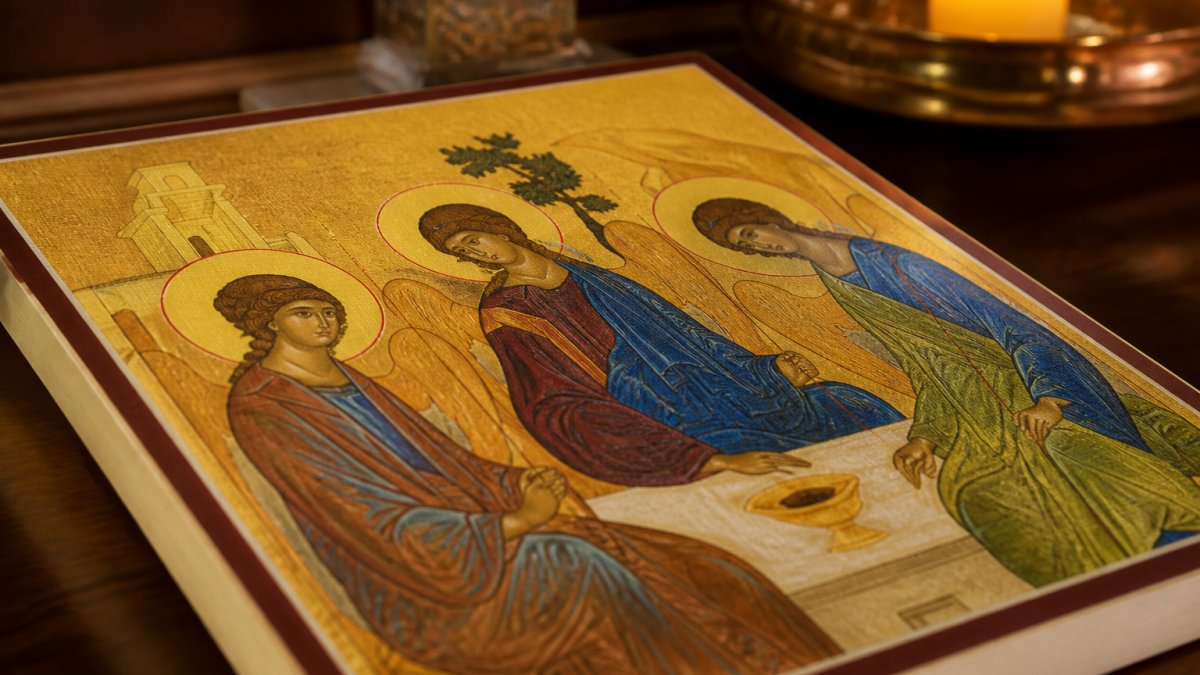
Here is what to check on any printed icon:
- Ink type: archival pigment inks resist fading better than dye inks
- Substrate: fine art canvas beats poster paper every time
- Mounting: a maple panel keeps the canvas flat and gives it weight
Many buyers ask whether a printed icon can look appropriate in a church. For more on resolution and sizing, see our guide to high resolution Orthodox icon prints.
How to Choose an Orthodox Icon for Your Home Altar or Parish
Start with the space, not the catalog. Measure the wall or shelf first. Then choose the saint or feast that fits your prayer life.
A simple approach works well:
- Measure the available space and note the height you can hang at
- Pick the subject: Christ, the Theotokos, a patron saint, or a feast day
- Decide on size, small for a home altar, larger for a parish wall
- Choose the material and finish that suits the room
- Check the lead time before a feast or dedication date
For a full walkthrough of placement and arrangement, our step-by-step home altar guide covers location, icons, and sacred objects.
Recommendations by Budget
Most buyers fall into one of three budget bands. Match the band to the material, not the other way around.
- Entry budget: a small printed icon on paper or a thin panel is the lowest-cost way to start a home altar. Expect a smaller size and simpler mounting.
- Mid budget: a canvas print mounted on a solid panel with a UV clear coat gives you a durable piece that holds color and looks appropriate in a church or home.
- **
Buyers regret going too small more often than they regret going slightly over budget. If you are between two sizes, measure the wall again before you decide.
Recommendations by Intended Use
- Daily prayer at a home altar: one central icon of Christ or the Theotokos, plus one or two patron saints, in a size that fits the shelf
- A gift for a baptism, wedding, or ordination: a patron saint or feast-day icon in a mid-size panel, with a note on the source church or monastery
- A parish nave or chapel: consistent sizes and a shared visual style across the set, ordered together so the finish matches
Recommendations by Style Preference
- Traditional gold background: a common choice for a church setting
- Deep solid color background: a warmer look for a home, and often easier to hang against painted walls
- **
Recommendations by Delivery Urgency
- More than a month out: order the exact size and material you want, and confirm the lead time in writing
- Two to four weeks out: ask whether the seller has the piece in stock, and choose a shipping option with tracking
- Under two weeks out: prioritize in-stock items and a seller who answers quickly; a custom or made-to-order piece is unlikely to arrive in time
A Quick Decision Path
If you are still unsure, answer these three questions in order:
- What is the space, and what size fits it?
- What is the budget band, and which material fits that band?
- What is the deadline, and does the seller's lead time fit it?
The answers narrow the catalog to a handful of options, and the rest is a matter of which saint or feast you want to pray before.
Shopping for Orthodox Icons Online: What to Verify Before You Buy
Verify three things before you pay: the source of the image, the materials used, and the seller's support terms. Everything else is secondary.
Use this checklist before checkout:
- The seller names the source church or monastery
- The listing states ink type, substrate, and mounting
- The seller shows real photos, not just mockups
If you want a broader walkthrough, read our guide on where to buy authentic icons.
Traditional Iconography and Visual Conventions to Look For
Traditional icons share a visual grammar, and learning it helps you spot quality fast. Look for a gold background or a deep solid color.
The garments should follow set patterns. The inscriptions should name the figure. The proportions should look deliberate, not accidental.
A printed reproduction should preserve all of this. If the gold looks like flat yellow ink, or the face looks like a modern portrait, the source image was weak.
Ordering Iconography for Your Church or Home Prayer Space
Ordering for a parish is different from ordering for a shelf. You need consistent sizes, a shared visual style, and a delivery schedule that fits your building timeline.
Mission parishes often work on tight budgets, and printed icons on maple panels are one option to consider.
When you are ready to act, browse the full Holy Icons category to see the available subjects and sizes.
Choosing iconography for a parish or home altar takes care.
Frequently Asked Questions
What is the difference between an Orthodox icon and religious art?
An Orthodox icon is a liturgical object created according to strict traditional conventions, intended to draw the viewer into prayer and communion with the depicted saint or scene. Religious art, by contrast, is often a personal or decorative expression that may borrow sacred imagery without following iconographic rules. Icons are typically venerated in church and home worship, while religious paintings serve a broader cultural or aesthetic purpose. The distinction matters when you are buying for a prayer corner or parish, because theological accuracy and traditional style should guide your choice.
Are printed Orthodox icons suitable for a home prayer corner?
Yes. Printed Orthodox icons are widely used in home prayer corners, provided they are produced with care and respect for the original image. Look for archival inks, quality canvas or paper, and a solid mounting such as a maple panel with a protective clear coat. Many families choose printed icons for daily prayer and reserve hand-painted pieces for larger church settings or special gifts.
How do you choose an authentic Orthodox icon when shopping online?
Start by verifying the seller's sourcing and production process. Ask where the original image came from, whether it was photographed onsite at a church or monastery, and what materials are used. Check for details on the printing method, panel construction, and any UV protection. Read the return and damage policy before ordering. A seller who explains these steps openly is more likely to offer icons that match Orthodox tradition rather than generic religious imagery.
What should you look for when buying an Orthodox icon online?
Look for clear product photos, stated dimensions, and a description of the materials and finish. Confirm whether the icon is handcrafted or a printed reproduction, and check whether the seller offers custom sizes or specific saints. Review shipping lead times and how the seller handles damage in transit. If the listing is vague about production methods or artist attribution, ask before you buy. Transparency about sourcing and craftsmanship is the strongest signal of quality.

Explore Popular Articles
Agiografia Icons vs Christianity Art: What's the Difference?
Last Updated: November 26, 2026 Quick Summary Agiografia icons are liturgical objects made to be ve...
How to Choose Icon Size for Screens and Sacred Art
Last Updated: November 24, 2026 Quick Summary To choose icon size, first decide whether you mean a...
7 Handcrafted Maple Panel Religious Art Pieces Worth Considering
Last Updated: November 22, 2026 Quick Summary Handcrafted maple panel religious art pairs a sacred...
How to Choose Between Modern and Traditional Icon Printing
Last Updated: November 17, 2026 Quick Summary Choose modern icon printing when you need faithful, d...