
Where to Buy Authentic Icons: A 2026 Buyer's Guide

Table of Contents
- Where to Buy Authentic Icons: What Sets a Real Icon Apart
- How to Choose an Orthodox Icon for Your Space and Budget
- Hand-Painted Orthodox Icons: What You're Paying For
- Printed Orthodox Icons: Archival Quality Without the Studio Price
- Orthodox Icons for Home Altar: Sizing and Placement
- Caring for Your Icons: Maintenance and Restoration Basics
- Ethical Sourcing and Monastery Partnerships
- Conclusion
- Frequently Asked Questions
Last Updated: October 13, 2026
Where to Buy Authentic Icons: What Sets a Real Icon Apart
An authentic icon is a sacred image created within the living tradition of the Orthodox Church, made with materials and methods that honor its devotional purpose. Authenticity is about fidelity to tradition, not just appearance.
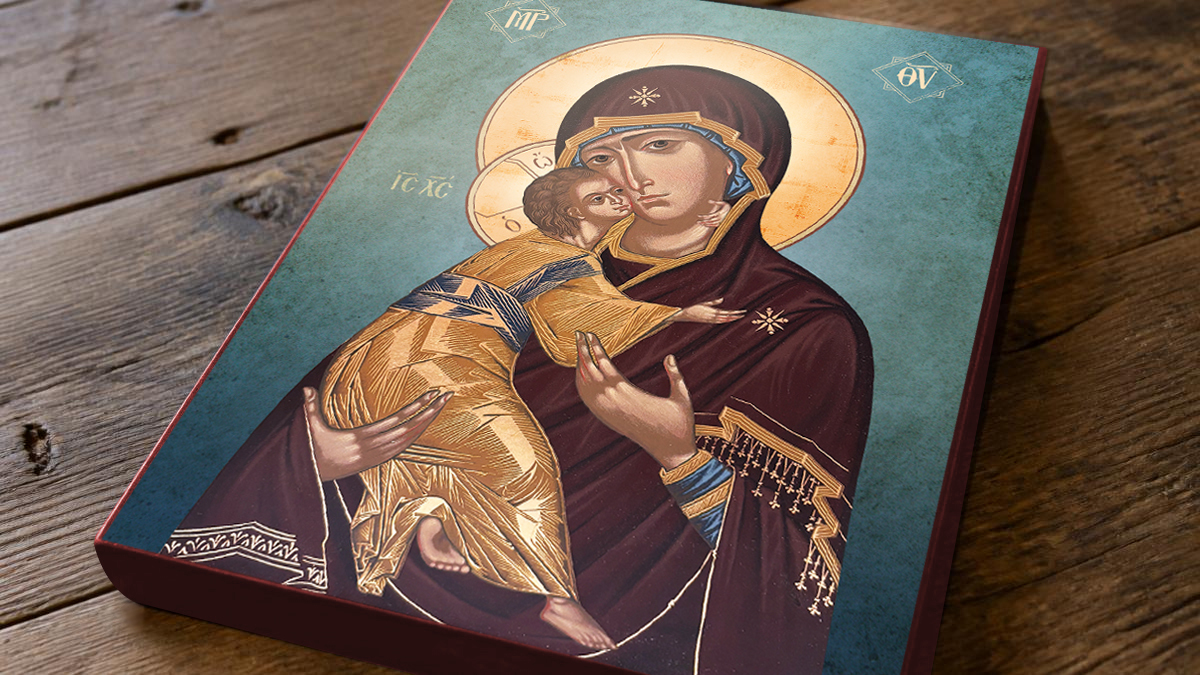
At Theophany Works, we photograph iconography onsite at churches and monasteries, then reproduce each image in our Lancaster, Pennsylvania studio.
The market makes this harder than it should be. Search results mix genuine devotional objects with decorative wall art, and the difference is not always obvious in a product photo.
Authentication Markers: How to Spot a Genuine Icon
Genuine icons carry markers that decorative prints do not. Check these before you buy:
- Theological accuracy: The image follows established iconographic tradition, not an artist's invention.
- Material honesty: The seller states exactly what the icon is made of, whether hand-painted, printed on canvas, or mounted on wood.
- Provenance: A reputable seller can explain where the source image came from.
- Consistent style: Byzantine proportions, gold leaf or gilded backgrounds, and traditional color palettes are all signs of fidelity to the tradition.
A common mistake is assuming "hand-painted" automatically means authentic. A painting can be handmade and still depart from Orthodox iconography. Ask about the source and the process, not just the technique.
How to Choose an Orthodox Icon for Your Space and Budget
Choosing an Orthodox icon comes down to four decisions: purpose, size, material, and quality tier. The fourth is where most buyers get burned.
Start with purpose.
Then match size to the space. Measure before ordering: an icon that is too small disappears, and one that is too large overwhelms a prayer corner.
Finally, decide on material based on how the icon will live.
Quality Tiers: What You Are Actually Buying
Icons fall into roughly four tiers, and knowing them is the fastest way to avoid overpaying or underbuying:
- Mass-produced paper or canvas prints. Inexpensive, often laminated or glued to a thin board. Colors fade, edges curl, and the image is frequently a low-resolution scan. Fine for a dorm room, not for a prayer corner.
- Decorative "icon-style" wall art. Handmade or printed, but not bound to iconographic tradition. Proportions, halos, and inscriptions may be invented. Attractive, but not devotional in the Orthodox sense.
- Archival reproductions of genuine icons. Photographed from a real icon at a church or monastery, printed with pigment inks on fine art canvas, mounted to a solid wood panel, and sealed. This is the tier most households and missions land in, and it is where material honesty matters most.
- Hand-painted originals. Created by a trained iconographer using traditional methods, gessoed panel, gold leaf, natural pigments, layered glazes. Singular, slow to acquire, and priced accordingly.
A common mistake is assuming "hand-painted" automatically means authentic. A painting can be handmade and still depart from Orthodox iconography. Ask about the source and the process, not just the technique.
A Quick Authentication Checklist
Before you buy, run through these questions. A reputable seller answers all without hesitation:
- Where did the source image come from? A studio that photographs icons onsite at churches and monasteries will answer immediately. A reseller usually cannot.
- What is the icon actually made of? Ink type, substrate, mounting, and surface finish should be stated plainly, not described in vague marketing language.
- Is the iconography theologically accurate? Halos, inscriptions, gestures, and color palettes should follow established tradition, not an artist's invention.
- Can the seller explain the tradition behind the image? If they cannot name the feast, saint, or iconographic type, that is a signal.
- Is the price consistent with the tier? A hand-painted original at a print price is a red flag; an archival reproduction priced like an original is a different kind of red flag.
Orthodox Church in America on the veneration of icons
Hand-Painted Orthodox Icons: What You're Paying For
Hand-painted Orthodox icons are original works created by an iconographer using traditional techniques passed down through generations.
The iconographer's formation matters most: Master iconographer Kyriakos Kosova, who partners with Theophany Works, represents the training behind serious hand-painted work.
Beyond skill, you pay for materials: gessoed wood panels, genuine gold leaf, natural pigments, and the patience to build an image in layers.
The honest trade-off: hand-painted icons are singular, but slower to acquire and harder to source consistently, especially when a parish needs several matching pieces.
Printed Orthodox Icons: Archival Quality Without the Studio Price
Printed Orthodox icons reproduce a photographed original at high resolution, making them practical for homes, missions, and growing parishes. Quality comes down to materials and process.
Our approach at Theophany Works is to photograph icons onsite at churches and monasteries, print the images with archival inks on premium fine art canvas, and mount each one onto a smooth maple panel.
Materials That Determine Longevity
Longevity in a printed icon depends on four things:
- Ink type: Archival pigment inks hold color far longer than standard dye inks.
- Substrate: Fine art canvas accepts ink evenly and resists cracking.
- Mounting: A solid maple panel prevents warping and gives the icon structure.
- Surface protection: A UV clear coat limits fading from sunlight and indoor lighting.
Skip any one of these and the icon may look fine on arrival but age poorly.
Orthodox Icons for Home Altar: Sizing and Placement
Orthodox icons for a home altar should be sized to the space and arranged to support prayer, not to fill a wall.
Measure first. A typical prayer corner works well with a central icon in the 8x10 to 16x20 inch range, with smaller companion icons around it. Larger homes and parish settings can carry bigger formats, where high-resolution source images keep detail sharp.
Placement follows tradition as much as design. Icons traditionally face east where possible, and the altar sits at a height that allows comfortable veneration.
Caring for Your Icons: Maintenance and Restoration Basics
Caring for icons is mostly about prevention, but the details differ sharply by tier. Treating a hand-painted panel like a printed reproduction, or the reverse, is how icons get damaged.
Routine Care for Printed and Sealed Icons
For printed icons sealed with a UV clear coat, dust gently with a soft, dry microfiber cloth, working from the center outward, and use a lightly dampened cloth for marks. Never use solvents, abrasives, or alcohol-based cleaners, which can cloud the finish or lift the ink layer.
Keep icons out of direct sunlight and away from heat sources. A south-facing window with sustained afternoon light will fade any print over time, regardless of ink quality, and strong halogen or unfiltered LED sources accelerate fading.
Routine Care for Hand-Painted Panels
Hand-painted icons on gessoed wood are more sensitive than prints. Dust with a very soft, dry brush, a clean makeup or sable brush, rather than a cloth, which can catch on raised gold leaf.
Gold leaf is the most fragile element: touching it with bare fingers deposits oils that dull the surface and can lift the leaf over time. Handle the icon by its edges, and consider cotton gloves if you move it often.
What Not to Do
A few well-intentioned habits cause most damage:
- Do not attempt restoration yourself. Traditional restoration is specialized work. Improper cleaning can permanently damage gilding, paint layers, and the gesso ground beneath them.
- Do not store icons in damp basements or attics. Wood panels warp, gesso cracks, and mold can colonize the surface.
- Do not reframe or remount a hand-painted panel without advice. Original mounting is often part of the icon's structural integrity.
- Do not use furniture polish, vinegar, or "gentle" household cleaners. None of them are gentle on icon surfaces.
When to Call a Conservator
Antique icons and hand-painted panels with active damage, flaking paint, lifting gesso, cracked panels, or darkened varnish, need a conservator, not a cleaning. Look for training in paintings conservation, ideally with Byzantine or Orthodox experience. The American Institute for Conservation maintains a searchable directory of credentialed conservators, and many regional museums offer referrals.
A conservator will typically begin with documentation and a condition report before any treatment. Ask for both. Proper restoration is slow, reversible where possible, and documented, anything faster is a warning sign.
Storing Icons You Are Not Displaying
If you rotate icons or store them seasonally, wrap each one in acid-free tissue or unbleached cotton, face up, in a flat archival box. Avoid plastic wrap, which traps moisture. Keep the box in a climate-stable interior room, not a garage, attic, or basement, and check stored icons once or twice a year for flaking or warping.
Smithsonian Museum Conservation Institute guidance on caring for paintings
Ethical Sourcing and Monastery Partnerships
Ethical sourcing in iconography means knowing who made the image, how they were treated, and whether the source was used with permission. Many sellers stay vague here.
The strongest supply chains are built on direct relationships with churches and monasteries.
Monasteries have long been centers of icon creation, and many still produce icons as devotional work.
Ask sellers whether they photograph originals themselves or license from others.
| Buying Consideration | What to Check | Why It Matters |
|---|---|---|
| Authenticity | Source image and tradition | Ensures the icon is theologically sound |
| Material | Ink, substrate, mounting, finish | Determines how long the icon lasts |
| Size | Measured space and purpose | Prevents an icon that is too small or large |
| Sourcing | Who made it and how | Supports ethical, transparent production |
| Care | Cleaning and light exposure | Protects color and surface over decades |
Conclusion
Finding icons that are both beautiful and true to tradition takes more care than a quick search allows.
At Theophany Works, we photograph iconography onsite at churches and monasteries, print each image with archival inks on premium fine art canvas, mount it onto a smooth maple panel, and seal it with a UV protectant clear coat.
Subscribe to our newsletter to see new iconography as it becomes available.
Frequently Asked Questions
How can you tell if an Orthodox icon is authentic?
Authentic icons follow traditional iconographic canons: correct proportions, symbolic colors, and proper inscriptions. Look for gold leaf or gilded details, hand-painted or archival-printed surfaces, and a solid wood or maple panel backing. Ask the seller about their sourcing and production process. Reputable sellers photograph icons onsite at churches and monasteries, then reproduce them with archival inks on fine art canvas. If a seller cannot explain their materials or methods, treat that as a warning sign.
Are printed Orthodox icons suitable for a church or parish?
Yes. Printed icons mounted on maple panels and sealed with a UV protectant clear coat hold up well in church settings. They offer exceptional clarity even in larger sizes and resist fading. Many mission parishes on tight budgets use archival-quality printed icons for liturgical use. The key is choosing a seller who uses fine art canvas, archival inks, and proper sealing, not thin paper prints. These durable devotional objects look appropriate and reverent in any parish.
What should you look for when choosing an icon for a home altar?
Start with the saint or feast day that holds personal meaning for your family. Measure your altar space before ordering so the icon fits proportionally. Consider the material: hand-painted icons offer heirloom quality, while printed icons on maple panels provide clarity and durability at a lower cost. Check that the seller uses traditional techniques and offers sizing guidance. For home altars, medium sizes work well for personal prayer spaces, while larger pieces suit family prayer corners.
How do you care for an Orthodox icon?
Keep icons out of direct sunlight to prevent fading, even UV-protected ones. Dust gently with a soft, dry cloth. Avoid commercial cleaning sprays, which can damage gold leaf, paint, or the clear coat. Maintain stable humidity; extreme swings cause wood panels to warp or crack. For antique icons or pieces with patina, consult a professional conservator before attempting any restoration. With proper care, archival-quality icons last for decades and become heirloom pieces for your family.
Explore Popular Articles

Where to Buy Authentic Icons: A 2026 Buyer's Guide
Table of Contents Where to Buy Authentic Icons: What Sets a Real Icon Apart Authentication Markers...