Agiografia Icons vs The Holy Art: Which Orthodox Icon Shop Fits

Quick Summary
Choosing an orthodox icon shop comes down to how the icon is made, its total cost once shipping is added, and whether the seller stands behind the piece after delivery. The Holy Art describes its icons as handmade Greek work, while Theophany Works reproduces icons from onsite photography on canvas mounted on maple, so buyers should confirm each shop's details in writing.
- Decide first whether a hand-painted original or a faithful archival reproduction suits your purpose.
- Build a total-cost worksheet comparing listed price, shipping, sales tax, packaging and return terms.
- Ask each shop for the source image, the maker, and the inks, canvas, panel and coating used.
- Confirm shipping damage handling, including whether photographing the packaging is required before discarding it.
- Recheck prices on a second date, because listings and promotions can change.
Table of Contents
- Agiografia Icons vs The Holy Art at a Glance
- What Orthodox Icons Are and Why Craftsmanship Matters
- How to Choose an Orthodox Icon: Materials, Craftsmanship and Method
- Handmade vs Printed: Verifying Authentic Orthodox Icons and Their Provenance
- Price, Shipping, Returns and Customer Service Compared
- Icon Type, Size and Intended Use: Which Shop Fits Your Need
- Choosing Your Orthodox Icon Shop and Placing Your Order
- Frequently Asked Questions
Agiografia Icons vs The Holy Art: Which Orthodox Icon Shop Fits
Last Updated: November 12, 2026
Choosing an Orthodox icon shop comes down to three things: how the icon is made, what it costs once shipping is added, and whether the seller stands behind the piece after it arrives. This comparison looks at Agiografia Icons and The Holy Art against those criteria, and it explains where a shop like Theophany Works fits in for home altars, parishes and gifts. Because pricing and product details change, treat the notes below as a framework for your own check rather than a final verdict.
Orthodox icons are sacred images, and the buyer's question is not only about looks. A devout buyer wants an image that is theologically faithful, durable enough for daily veneration, and sourced honestly. Theophany Works reproduces icons from high-resolution photographs taken onsite at churches and monasteries, printed with archival inks on fine art canvas and mounted on maple panels. That method is different from a hand-painted panel, and the rest of this comparison explains why the difference matters.
Agiografia Icons vs The Holy Art at a Glance
Here is the short version, organized the way a buyer actually decides. The Holy Art presents itself as a seller of Greek handmade Orthodox icons. Agiografia Icons is the other shop in this comparison, and its product details should be confirmed directly with the seller. Theophany Works is included as a third reference point because its production method, archival reproduction from onsite photography, is a genuinely different category from either handmade shop.
| Factor | The Holy Art | Agiografia Icons | Theophany Works |
|---|---|---|---|
| Stated production method | Handmade, Greek | Confirm in writing | Printed on canvas, mounted on maple panel |
| Price visibility | Advertises transparent pricing and wholesale discounts up to 50% | Confirm current listings | Quote on request or site listing |
| Product range to check | Saints, Christ, Virgin Mary, feast days, sizes and finishes | Saints, feast days, panel sizes, finishes | Home altars, parishes, gifts |
| Provenance claim to verify | Artist or workshop behind each icon | Source image and maker | Onsite photography at churches and monasteries |
| Shipping and returns | Confirm in writing | Confirm in writing | Confirm in writing |
| Best for | Buyers wanting Greek handmade work, including wholesale | Buyers who confirm details first | Home altars, parishes, gifts |
A useful first step is to decide whether a hand-painted original or a faithful archival reproduction fits your purpose. Hand-painted work suits collectors and buyers who want a single artist's panel. Reproductions suit families who want a faithful icon for daily prayer. The table above is a starting map, not a verdict, the sections below explain what to ask so each cell becomes a documented answer instead of a marketing phrase.
What Orthodox Icons Are and Why Craftsmanship Matters
An Orthodox icon is a sacred image of Christ, the Virgin Mary, angels or saints, made in a tradition that stretches back to the Byzantine period. Icons are not decoration in the usual sense. They are a window for prayer and veneration, and the faithful treat them with reverence.
Craftsmanship matters because it affects how faithfully the image reflects the tradition. A carefully prepared image keeps the proportions, colors and inscriptions that the iconographic canon requires. A poorly reproduced image can distort faces or lose the gold detail that gives an icon its character. Ask any shop how its images are prepared and whether the source image was checked against an authentic original.
How to Choose an Orthodox Icon: Materials, Craftsmanship and Method
Start with the material, because it determines longevity and appearance. Hand-painted icons are commonly made on wood panels. Printed icons use archival inks on canvas. Each has a place, and a serious buyer should know which one they are paying for. Our high resolution Orthodox icon prints guide explains resolution checks, canvas and wood panel options, and sizing for home altars.
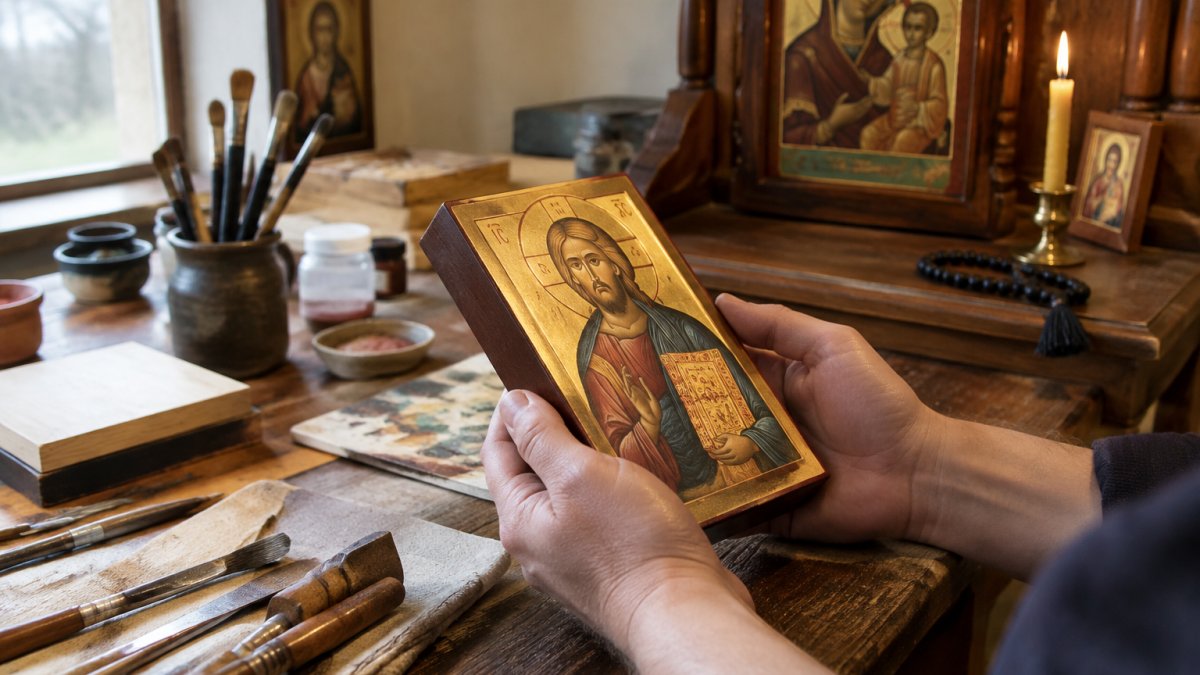
Next, ask about the method. A shop that photographs sacred images directly, and says so, gives you a verifiable provenance. Theophany Works states that its images are captured onsite at churches and monasteries, then printed and sealed with a UV protectant clear coat. Those are concrete claims you can ask the seller to confirm.
Finally, check the finish and mounting. Confirm the surface and coating a shop uses before you buy. Watch out for listings that describe a product as "hand-painted" without naming the surface or finish.
Handmade vs Printed: Verifying Authentic Orthodox Icons and Their Provenance
Many buyers ask whether a printed icon is less authentic than a handmade one. The honest answer depends on what you value. A handmade icon is an original work by an iconographer. A printed reproduction is a faithful copy of a sacred image, made for devotional use. To see how printing turns an image into an archival reproduction and which materials matter, read how custom Orthodox icon printing services work.
To verify provenance, ask each shop:
- Where the source image came from, and whether it was photographed from an authentic icon
- Who prepared the image and who produced the final piece
- Whether the product is hand-painted, printed, or a combination
- What inks, canvas, panel and coating are used
The Holy Art describes its icons as handmade and Greek, and you can ask it to document that with the artist or workshop. Theophany Works describes its process as reproduction from onsite photography, which is a different claim and should be judged on its own terms. Neither description settles authenticity by itself. A written answer to these questions does.
Price, Shipping, Returns and Customer Service Compared
Price is where most icon comparisons go wrong, because the sticker price is only one line of the total cost. Shipping, sales tax, packaging, returns and the cost of replacing a damaged piece all change what you actually pay. Any figure in a listing should be checked on the day you buy.
Build a total-cost worksheet before you compare. For each shop, record the same fields on the same day: the listed price of one equivalent icon (same saint or feast, similar dimensions, similar finish), the shipping charge to your ZIP code, any sales tax the seller collects, the packaging fee if itemized, and the stated return window. Add them into a single landed cost per shop.
Match the product, not the category. A printed panel and a hand-painted panel are not the same purchase, so compare within a type. Ask each shop for the dimensions, the surface (wood panel, canvas on panel, or canvas alone), the finish (gold leaf, UV clear coat, varnish), and whether the icon is ready to hang.
Shipping and damage handling. Ask how the icon is packed (corner protection, rigid box, glass or no glass), what carrier is used, whether tracking is included, and who files the claim if the piece arrives damaged. A common pattern is that the seller replaces transit-damaged items only if the buyer photographs the packaging before discarding it, so confirm the exact steps in writing before you open the box.
Returns and customer service. Ask for the return window in days, whether return shipping is paid by the buyer, and whether custom or made-to-order icons are excluded from returns. For response time, send one specific question, for example, the dimensions and finish of a named icon, and note how long a written reply takes.
A dated, like-for-like check you can repeat. Choose one icon both shops carry, such as a Christ Pantocrator or a Theotokos, in a comparable size. Record the listed price, shipping, tax, and return terms for each on the same date, then recheck a week later to see whether prices or promotions moved.
Pricing for Theophany Works depends on quantity, dates, and delivery, so request a current quote or check the website before you budget. Apply the same worksheet to all three shops so the comparison stays fair.
Icon Type, Size and Intended Use: Which Shop Fits Your Need
The right shop depends on what you need the icon for. A home altar, a parish interior and a baptism gift each call for different sizes and finishes. Theophany Works offers pieces for home altars and parishes, with exceptional clarity even in larger sizes. For parish settings where icons face candle smoke and daily veneration, see our guide to durable icons built to last in parishes. A small parish may find a durable printed piece suits the space, while a collector may want a hand-painted work.
For gifts, consider the occasion. A baptism or name day icon usually calls for a modest size that can be displayed for years. For a parish, measure the wall or iconostasis space and ask the seller about sizing before ordering, so the piece is neither too small nor overwhelming. If you are setting up a home prayer corner, our guide to choosing icons for your prayer corner covers selecting and arranging icons for home prayer.
Choosing Your Orthodox Icon Shop and Placing Your Order
Before you order, list your priorities: authenticity of the image, production method, durability, total cost, and how the seller handles problems. Compare Agiografia Icons, The Holy Art and Theophany Works against that list, and ask each one for written answers. Then choose the shop that answers most clearly.
Theophany Works is an option for buyers who want an archivally printed icon made from onsite photography, mounted on maple and sealed with a UV protectant clear coat. Contact the team or visit the website for current options and a quote before you place an order, and confirm the details that matter most to you in writing.
Theophany Works offers handcrafted Orthodox Christian iconography. Visit the site for current product details and pricing.
Frequently Asked Questions
Is The Holy Art a legitimate icon retailer?
The Holy Art presents itself as a seller of Greek handmade Orthodox icons. Those claims are the retailer's own. Before buying, check the product page for dimensions, materials and shipping terms, and ask the shop directly to confirm who painted the icon and where. A clear, prompt answer to those questions is a useful sign of a reliable seller.
What is the difference between Agiografia Icons and The Holy Art?
Both shops sell Orthodox icons, but the research available for this comparison does not give enough verified product detail to rank one as better on craftsmanship. The Holy Art's listings describe its icons as Greek and handmade. Compare each shop's medium (hand-painted, printed or mixed), panel material, size range and total cost including shipping. Those details, checked on each product page, will show the real difference more clearly than any general summary.
Are Agiografia Icons and The Holy Art icons handmade?
The Holy Art's search listing describes its icons as handmade and Greek. For Agiografia Icons, confirm the production method on the product page or by email before ordering. A genuinely hand-painted icon is normally described with the painter's name or workshop, the medium used, and the substrate. If a listing does not state the method, ask. Printed icons on canvas or panel are a legitimate option, but they should be labeled as prints.
How can you tell whether an Orthodox icon is authentic?
Authenticity has two parts: the icon's theological and iconographic accuracy, and the truth of the seller's claims about how it was made. Check that the depicted saint or scene follows traditional Orthodox iconography and is labeled correctly. Then check the seller's claims about handmade production, materials and origin. Ask for clear photographs of the front, edges and back, and for the iconographer's name where one is claimed. A reputable seller answers these questions without hesitation.
How do printed Orthodox icons compare with hand-painted icons?
Hand-painted icons use tempera or similar media applied by an iconographer, often on a wood panel with gesso and gold leaf. They cost more and vary subtly from piece to piece. Printed icons reproduce an image with archival inks on canvas. Either can serve prayer and veneration in the Orthodox tradition. Choose by budget, intended use and how much you value hand-painting.

Explore Popular Articles
Agiografia Icons vs Christianity Art: What's the Difference?
Last Updated: November 26, 2026 Quick Summary Agiografia icons are liturgical objects made to be ve...
How to Choose Icon Size for Screens and Sacred Art
Last Updated: November 24, 2026 Quick Summary To choose icon size, first decide whether you mean a...
7 Handcrafted Maple Panel Religious Art Pieces Worth Considering
Last Updated: November 22, 2026 Quick Summary Handcrafted maple panel religious art pairs a sacred...
How to Choose Between Modern and Traditional Icon Printing
Last Updated: November 17, 2026 Quick Summary Choose modern icon printing when you need faithful, d...