
7 Durable Orthodox Icons Built to Last in Parishes

Last Updated: November 1, 2026
Quick Summary
Choosing durable orthodox icons for parishes means matching the material to the building: stable, light-controlled spaces favor hand-painted wood, humid or intermittently heated buildings favor metal or sealed panels, and long-horizon locations favor mosaic. Every supplier should provide the ink or pigment rating, topcoat specification, and humidity range the piece is built for.
- Match icon height to viewing distance: 6 to 8 meters needs substantial height, 2 meters can be smaller.
- Archival prints on canvas mounted to wood typically serve 15 to 30 years in church light.
- Mosaic is the most permanent option; long-term risks are grout and substrate, not the image.
- Mount large icons with two or more attachment points and a secondary safety restraint.
- Dust icons with a soft, dry cloth, never wet cleaners that can lift finish.
Table of Contents
- Why Durable Orthodox Icons Matter for Parish Life
- Large Orthodox Icons for Churches: Sizing a Nave, Chapel or Cathedral
- Church Icon Materials and Finishes That Survive Decades
- How to Choose Icons for a Church: A Parish Buying Framework
- 7 Durable Orthodox Icon Options for Parishes
- Placement, Mounting and Safety for Large Icons
- Caring for and Preserving Icons in a Busy Church
- Requesting a Quote from Theophany Works for Your Parish
- Frequently Asked Questions
Why Durable Orthodox Icons Matter for Parish Life
A parish icon is not decor. It is a liturgical appointment expected to serve generations of worshipers, and that expectation is exactly what makes durable orthodox icons for parishes a procurement decision rather than a shopping one.
The difference between an icon that lasts and one that fades shows up slowly: a panel near a south-facing window, a canvas collecting candle soot, a print whose inks were never rated for light exposure. These failures take years to appear and cost a parish far more than the original purchase.
Below, we break down sizing, materials, selection, mounting, and care, then walk through seven durable options with honest trade-offs.
Large Orthodox Icons for Churches: Sizing a Nave, Chapel or Cathedral
Size follows architecture, not preference. A cathedral-size icon needs enough scale to read from the back pew, while a chapel icon can sit closer to the worshipers.
As a working rule, match icon height to viewing distance: an icon viewed from 6 to 8 meters needs substantial height to register, while one above a side altar viewed from 2 meters can be smaller. Measure the wall, the sightline from the entrance, and surrounding fixtures before committing.
Large Orthodox icons for churches also have to respect proportion. An icon panel stretched to fit an awkward wall reads as a banner, not an icon. Choose a standard proportion and adjust the frame or surrounding paneling instead.
Church Icon Materials and Finishes That Survive Decades
Material choice decides lifespan more than any other factor, but "durable" is not one property.
| Material | Light fading risk | Humidity / movement | Soot and cleaning | Impact and handling | Typical service pattern |
|---|---|---|---|---|---|
| Hand-painted egg tempera on prepared wood | Low to moderate; pigments stable, but varnish and ground age | High; wood moves with humidity, risking cracks and paint loss | Moderate; porous surface traps soot | Moderate; dents and abrasion possible | Decades to generations with stable conditions and periodic conservation |
| Archival print on canvas mounted to wood panel | Moderate; depends entirely on ink rating and UV topcoat | Moderate; canvas and wood move together if properly mounted | Low to moderate; sealed surface wipes clean | Moderate; canvas can dent or tear at edges | 15-30 years in typical church light; longer in controlled light |
| Giclée on archival paper, framed under glazing | Low if glazed with UV-filtering glass; high if unglazed | Low; paper is stable when framed and backed | Low; glass protects the surface | High; glass can break in public spaces | 20-50 years with UV glazing and stable humidity |
| Solid limewood panel, hand-prepared | Low to moderate, as with painted wood | High; solid wood responds strongly to humidity swings | Moderate | Moderate to high; heavy and dentable | Generations if the panel is properly braced and sealed |
| Aluminum or metal panel | Low to moderate; surface coating determines fade resistance | Low; metal does not swell or shrink with humidity | Low; non-porous surface cleans easily | High; resistant to impact but can dent | 20-40 years; coating life is the limiting factor |
| Mosaic | Very low; glass and stone tesserae are colorfast | Low; rigid substrate, but grout and setting bed need soundness | Low; washable, but grout lines collect soil | Very high; essentially permanent once installed | Generations; maintenance is structural, not cosmetic |
| Embroidery and textile | Moderate to high; dyes fade and fibers degrade | Moderate; fibers absorb moisture and can mildew | High; fabric traps soot and incense residue | Low; snags, tears, and handling wear | 10-30 years depending on display and handling |
Hand-painted icons on prepared wood. The traditional standard.
Giclée on paper under glazing. Framing behind UV-filtering glass gives strong protection at moderate cost, but glass introduces breakage risk in high-traffic areas and adds weight.
Solid limewood panels. Traditional construction with genuine material weight and a surface that takes gesso and paint well.
Aluminum and metal panels. Non-porous and dimensionally stable, a strong choice in older buildings with humidity swings or chapels heated intermittently.
Mosaic. The most permanent option and a liturgical art form in its own right.
Embroidery and textiles. Beautiful for processional and devotional use, but fibers absorb moisture, trap soot, and fade. Keep them out of direct light and store them properly when not displayed.
Getty Conservation Institute guidance on environmental control for collections is a useful reference for how light, heat, and humidity affect painted and printed surfaces.
For parishes weighing printed panels against hand-painted work, our high resolution Orthodox icon prints buyer's guide covers resolution, canvas and wood panel options, and sizing in detail. The craftsmanship behind those finishes comes from Kyriakos Kosova, master iconographer partnering with Theophany Works, whose background informs how we approach color, proportion, and surface.
How to Choose Icons for a Church: A Parish Buying Framework
Start with the liturgical calendar and the building, then work backward to budget. That order prevents buying attractive panels that duplicate subjects the parish already has.
Use this framework:
- Audit what exists. List every icon in the nave, chapel, and narthex, noting subject, size, and condition.
- Identify the gaps. Christ, the Theotokos, the patron saint, the feast days, and the Guardian Angel are typical priorities.
- Set the liturgical requirement. Confirm subject and placement with the priest before any purchase.
- Match material to environment. Humid or sunlit spaces push you toward sealed panels or metal.
- Confirm authenticity and provenance. Ask how the image was sourced and reproduced.
- Budget for installation and future care, not just the purchase.
Before committing, read our guide to where to buy authentic icons. It covers the difference between hand-painted and printed work and how to spot reproductions that will not hold up.
7 Durable Orthodox Icon Options for Parishes
These seven options cover the realistic range a parish will consider, from sealed printed panels to hand-painted wood and mosaic.
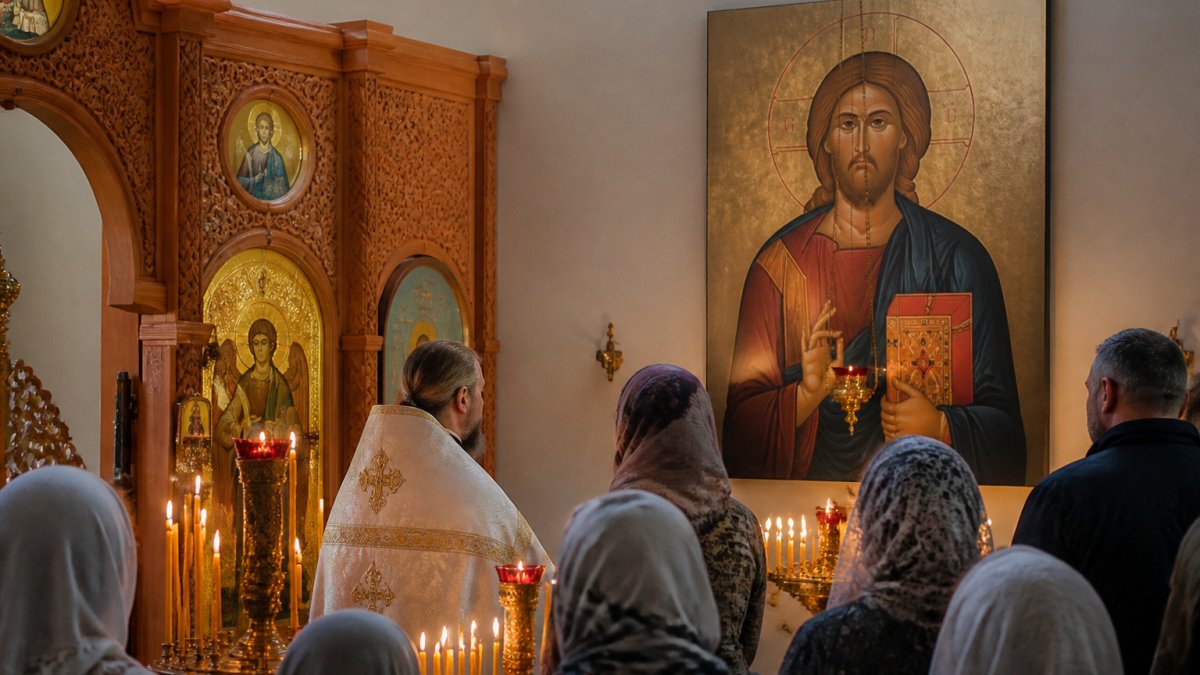
1. Theophany Works archival canvas on maple panels. Our icons are reproduced from high-resolution images photographed onsite at churches and monasteries, printed with archival inks on fine art canvas, mounted to smooth maple panels, and sealed with a UV protectant clear coat.
4. Solid limewood panels prepared by hand.
Browse the full range of Holy Icons to see the durable options available for your parish.
Placement, Mounting and Safety for Large Icons
Mounting is where well-chosen icons fail, and it is the part of a parish icon project most often left to whoever owns a drill. A cathedral-size panel is heavy, hangs above people, and stays there for decades.
Start with the wall, not the hardware. The substrate decides what is possible:
- Masonry and concrete. Strong anchors are available, but drilling and dust control matter in a worship space, and anchors must be rated for the substrate and the load. Confirm whether the wall is solid or a veneer over framing.
- Wood stud and drywall. Anchor into studs or into blocking added for the purpose. Drywall alone, even with heavy-duty toggle bolts, is not a mounting surface for a large icon.
- Plaster over lath. Common in older churches and deceptively weak; plaster is a finish, not a structural member. Find the framing behind it.
- Historic or decorative surfaces. Murals, stenciling, and stone veneer may limit where you can drill. Get approval before any penetration.
Design against rotation and pull-out. A single center hanger lets a large panel rotate and concentrates stress at one point; the failure usually happens when the building is full.
Place for worship and for safety. Keep large panels out of high-traffic circulation, away from door swings, and clear of direct heat sources, open candles, and sprinkler heads.
Plan the lift. Large panels need two or more people, lifting equipment, and a clear path from delivery to the wall. Protect floors and doorways, and schedule installation when the space is empty.
Document it. Record the mounting method, hardware, anchor type, and installer, and keep a photo of the attachment points. The next person to touch that wall will need it.
Caring for and Preserving Icons in a Busy Church
Care is mostly about controlling light, moisture, and soot. Direct sunlight does more cumulative damage than any other single factor, so position panels away from unshaded windows and use UV-filtering glazing where appropriate.
Dust with a soft, dry cloth rather than wet cleaners, which can lift finish and drive moisture into seams. Keep relative humidity stable; wide swings stress wood and canvas alike. Have any lifting, blistering, or frame separation assessed early by a conservator rather than repaired in-house.
Requesting a Quote from Theophany Works for Your Parish
Pricing depends on size, quantity, and delivery, so we quote each parish individually. Visit our website for current prices or to request a quote. Before you write, confirm your subjects, wall dimensions, and viewing distances.
You can review our materials, process, and full range of offerings first, then send your requirements for a quote. We will confirm sizing and give you a clear figure.
Frequently Asked Questions
What materials are best for durable orthodox icons displayed in a parish?
Archival inks on fine art canvas mounted to a solid wood panel, sealed with a UV protectant clear coat, hold up well in parish settings. The canvas gives a flat, traditional look, the maple panel keeps the icon from warping, and the UV coat slows fading from sunlight and candle smoke. For most parishes, a printed canvas on wood panel balances durability and budget.
Are canvas-mounted Orthodox icons suitable for church use?
Yes, when the canvas is archival-grade and mounted to a rigid panel rather than stretched on thin bars. A canvas print on a maple panel stays flat, resists warping in humid churches, and reproduces a photographed original at high resolution.
How should a parish choose the right size icon for a church interior?
Measure the wall or iconostasis space first, then match the icon to viewing distance. A panel that will be seen from 20 feet or more needs to be large enough for the face and halo to read clearly. Check ceiling height and doorways before ordering. Ask the studio about sizing options before committing.
How do parishes care for and clean mounted Orthodox icons?
Dust with a soft, dry cloth and avoid wet sprays, which can cloud the clear coat. Keep icons out of direct sun where possible, since UV coating slows fading but does not stop it. In churches with heavy candle use, wipe soot from the surface gently every few months. Inspect mounting hardware yearly and tighten any loose screws. Never use solvents or abrasive cleaners on the finish.
What should a parish consider before ordering a large Orthodox icon?
Confirm the subject and its theological accuracy, the finished size, the mounting method, and the delivery timeline. Ask about the material and finish, how the icon is sealed, and how it should be hung safely. Request a quote with your sizes so you can plan the purchase.
Furnishing a parish deserves better than guesswork about which panels will still look right in twenty years. Theophany Works builds icons for exactly that horizon, with archival inks on fine art canvas, smooth maple panels, and a UV protectant clear coat that guards color life. Get started with Theophany Works and specify durable orthodox icons your parish can hand on to the next generation.

Explore Popular Articles
Agiografia Icons vs Christianity Art: What's the Difference?
Last Updated: November 26, 2026 Quick Summary Agiografia icons are liturgical objects made to be ve...
How to Choose Icon Size for Screens and Sacred Art
Last Updated: November 24, 2026 Quick Summary To choose icon size, first decide whether you mean a...
7 Handcrafted Maple Panel Religious Art Pieces Worth Considering
Last Updated: November 22, 2026 Quick Summary Handcrafted maple panel religious art pairs a sacred...
How to Choose Between Modern and Traditional Icon Printing
Last Updated: November 17, 2026 Quick Summary Choose modern icon printing when you need faithful, d...