




-

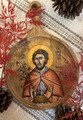
Icon of St. Euphrosynos the Cook - 00STEC01
$36.00 - $335.00Feast Day/Commemorated: September 11 Our Holy Father Euphrosynos the Cook was a devout and faithful man from a peasant background, lacking formal education. As an adult, he worked as a cook,... -

Icon of Saints Peter and Paul the Apostles - 00STPP01
$36.00 - $335.00Feast Day/Commemorated: June 29 A Homily of Saint Gregory Palamas for the Feast of Saints Peter and Paul1. The commemoration of each of the saints on the appointed feast day is an occasion for -

Icon of St. Xenia of Saint Petersburg - 21st c. - 00STXP01
$36.00 - $335.00Feast Day/Commemorated: January 24 Saint Xenia Grigorievna Petrova, an eighteenth-century Russian saint, embarked on an extraordinary path of "foolishness for Christ" after the sudden death of h -

Icon of St. Xenia of Saint Petersburg - 21st c. - 00STXP02
$36.00 - $335.00This beautiful and finely detailed icon is the work of our own Kyriakos Kosova. Kyriakos Kosova is a master iconographer who spent much of his life in Albania, Greece and Italy. He is now in the US... -

Icon of The Annunciation - 00FAN001
$28.00 - $625.00Feast Day/Commemorated: March 25 The Annunciation: Gabriel's Message to Mary "In the sixth
Description
Feast Day/Commemorated: September 11
Every Orthodox Christian should have an icon of Saint Euphrosynos in their kitchen! Now with our "Rustic Icon Cutting Board" it feels like it belongs all the more! This cutting board is made out of genuine wood and has an aged appearance that brings warmth to any setting. It's so easy to hang this icon from the handle, with a hook or nail of your choice! Remember this, however, this cutting board, is NOT meant for cutting on! It is meant for veneration and to make your space for cooking all the more blessed and beautiful!
Measures: 13.5" x 9.5" x 1"
***For Display and Veneration Only***
About Saint Euphrosynos the Cook
Our Holy Father Euphrosynos the Cook was a devout and faithful man from a peasant background, lacking formal education. As an adult, he worked as a cook, demonstrating remarkable self-control and generosity. Despite having access to the finest foods, he consistently chose simple fare for himself, saving money from his expenses to give to the poor. His life was marked by a profound humility and a consistent prioritization of spiritual well-being over worldly pleasures.
Later, Euphrosynos joined a monastery, where he continued his work in the kitchen. In this new setting, he prepared very plain food, a stark contrast to his previous secular cooking. When some monks complained and mocked his simple meals and rustic origins, Euphrosynos responded with meekness, explaining that elaborate cooking was not conducive to attaining the Kingdom of Heaven, and that excessive bodily pleasure could hinder the soul's true needs. He silently endured their scorn, striving only to please God through his virtuous, hidden life.
However, the Lord Himself chose to reveal Euphrosynos's spiritual eminence. A devout priest in the same monastery, who had prayed to understand the blessings awaiting those who love God, experienced a profound vision. In his sleep, he found himself in a beautiful garden filled with wondrous things. To his astonishment, he saw Father Euphrosynos standing there, partaking of the garden's delights, and learned that it was reserved for God's elect, with Euphrosynos having authority over its blessings.
The priest, still in his vision, asked Euphrosynos for something from the garden. Euphrosynos readily offered him some fragrant apples, placing them in his garment. Upon waking at the sound of the Midnight Service bell, the priest initially dismissed it as a dream, but then discovered the apples in his garment, still emanating their wonderful fragrance. Confronting Euphrosynos, who humbly denied being anywhere, the priest pressed him until the saint confessed the truth, confirming the divine revelation and the miraculous nature of the apples.
After Matins, the priest shared his vision and the miraculous apples with the brethren, who were filled with spiritual joy and awe at the ineffable fragrance. However, when they rushed to the kitchen, Saint Euphrosynos had already departed, fleeing human praise and glory, and could not be found. The apples were shared among the monks and given to visitors, especially those seeking healing, and many were cured of their ailments, testifying to the saint's powerful intercession. Saint Euphrosynos eventually reposed in a remote hermitage, and the Church, recognizing his profound holiness and adherence to God's will, numbered him among her Saints.