


-

Icon of St. Jerome -21st c. - 00STJE01
$36.00 - $335.00Feast Day/Commemorated: June 15 Saint Jerome, born Eusebius Hieronymos Sophronius in Stridon, was a pivotal figure in Christian history. He received a thorough secular education in Rome, where he... -

Icon of St. Christopher 21st c. - 00STCH02
$28.00 - $335.00Feast Day/Commemorated: May 9 Saint Christopher lived during the 3rd century and was martyred around the year 250 under the reign of Emperor Decius. He was a man of immense stature and strength,... -
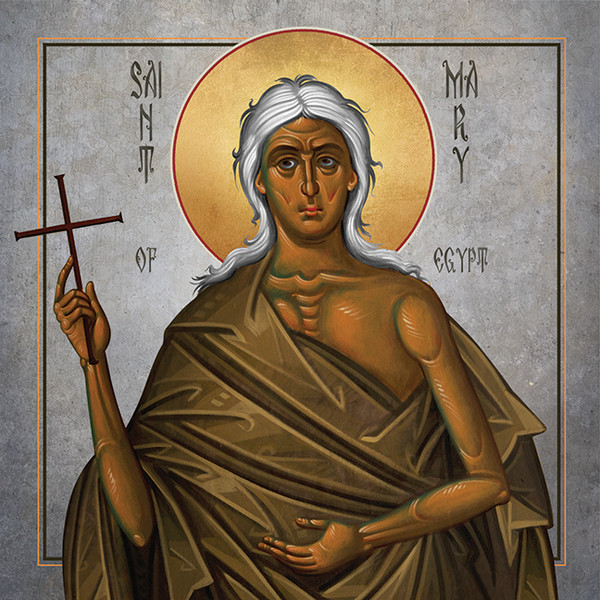
Icon of St. Mary of Egypt -21st c. - 00STME06
$34.00 - $325.00Feast Day/Commemorated: April 1 The Journey of Saint Zosimas and the Penitent Mary of Egypt Saint Zosimas, a monk who had lived an exem -

Icon of St. Luke the Surgeon - 21st c. - 00STLS01
$34.00 - $325.00Feast Day/Commemorated: April 22Saint Luke, a native of Syrian Antioch, was a highly educated physician skilled in Greek medicine. Upon hearing about Christ, he traveled to Palestine and eagerly... -

Icon of St. Luke the Evangelist - 21st c. - 00STLE01
$34.00 - $325.00Feast Day/Commemorated: April 22Saint Luke, a native of Syrian Antioch, was a highly educated physician skilled in Greek medicine. Upon hearing about Christ, he traveled to Palestine and eagerly...
Description
Feast Day/Commemorated: November 28
In 715, Stephen the New was born into a pious Christian family in Constantinople. His parents, having only daughters, had prayed for a son and, in gratitude, dedicated him to God at the Church of the Theotokos. During this time, the Byzantine Empire was ruled by Emperor Leo the Isaurian, who fiercely persecuted those who venerated holy icons. In a city dominated by the Iconoclast heresy, Orthodoxy was preserved in remote monasteries and in the hearts of the faithful. Due to the prevailing impiety, Stephen’s parents moved to Bithynia and, when Stephen was sixteen, placed him under the guidance of the monk John on Mount Auxentius. For over fifteen years, Stephen lived and learned from his spiritual elder. After receiving news that his father had died and his mother and sisters had become nuns, his own spiritual father, John, also reposed. Stephen continued his ascetic life alone in a cave before monks began to gather around him, establishing a monastery with Stephen as its abbot.
Later, at age forty-two, Stephen left the monastery he founded to live in solitude. However, a new community of monks soon gathered around him, seeking his spiritual guidance. This attracted the attention of the new emperor, Constantine Copronymos, a more zealous iconoclast than his predecessor. Constantine convened an iconoclast council that condemned the veneration of icons as heresy. The emperor was particularly angered by Stephen’s open support for Orthodoxy and his growing fame, which posed a significant challenge to the emperor’s authority and the Iconoclast movement. Archbishop Constantine, a supporter of the emperor, saw Stephen as an implacable enemy and sought to either convert him or destroy him.
The authorities first tried to bribe and flatter Saint Stephen, then resorted to threats, but he remained steadfast. They then falsely accused him of a sin with a nun, but she courageously denied the charge and died under torture. Finally, the emperor had Stephen imprisoned and his monastery destroyed. In prison, Stephen continued to preach against the Iconoclast heresy, easily refuting the arguments of the bishops sent to debate him. As a result, the emperor exiled him to an island, where Stephen’s disciples once again gathered around him. After a time, he became a stylite (one who lives atop a pillar), and news of his miracles spread, strengthening the faith of the people. Enraged, the emperor had Stephen brought to trial, where the saint boldly denounced the Iconoclasts. As a final act of protest, he used a coin with the emperor’s image to demonstrate how disrespecting an image is akin to disrespecting the person it represents. For this, Stephen was condemned and dragged through the streets of Constantinople before being thrown into a pit for criminals. The following day, a fiery cloud and a deadly hailstorm descended upon the city, seen by many as a divine sign of his martyrdom.
About Our Icons (Print and Mounted):
Theophany Works Icons are handcrafted reproductions, made with prayer and a desire for excellence. Choose from our standard mounted option on Museum Quality Paper or you may choose to upgrade to Museum Quality Matte Canvas. Both offer a rich print with saturated coloration and are finished with our high-grade UV protection sealant offering a subtle tactile texture that gives our icons a truly authentic feel. Additionally, each Maple-shelled panel is prepared with a painted chamfered front edge as well as a round-over on the back edge to give a shadow box effect when hung on the wall. Our Icons come standard with a sliding key-hole slot on the back which allows for balanced hanging. These beautiful American-made reproductions will be a beloved addition to any home or parish at the fraction of the cost of a hand painted icon.